
New York – architecture to look up
The New York skyline is one familiar to us all, but away from the tourist landmarks some of the best architectural discoveries can be found by walking the streets and simply looking up. For those who love 20th century architecture there’s a towering treat around every corner. Here are five of my favourite finds:
National Maritime Union Headquarters
36 Seventh Avenue (built 1963)
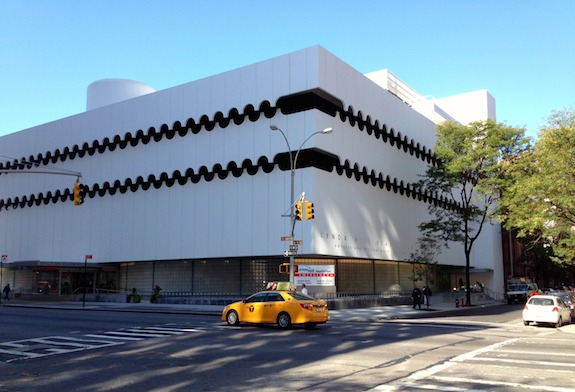
The National Maritime Union Headquarters, named after its founder and president Joseph Curran, was built by New Orleans architect Albert C. Ledner in 1963 – its white scalloped façade, rooftop ‘smokestack’ elevator and glass brick base designed to represent a sea voyage in the heart of the city.
In 1973 the building was bought by Saint Vincent Catholic Medical Center, located across the street, and renamed the Edward and Theresa O’Toole Medical Services Building. Greenwich Villagers nearly lost the Modernist marvel in 2008 when the Landmarks Preservation Commission granted St. Vincent’s application to replace the building with a hospital tower, but the hospital closed in 2010 before work could begin.
Fortunately for fans of the Midcentury ‘Marmite’ building, Ledner’s Seventh Avenue ship has since been anchored and restored by the North Shore-Long Island Jewish Health System for use as an emergency room and medical centre.
The National Maritime Union
363 West 16th Street, Chelsea (built 1966)
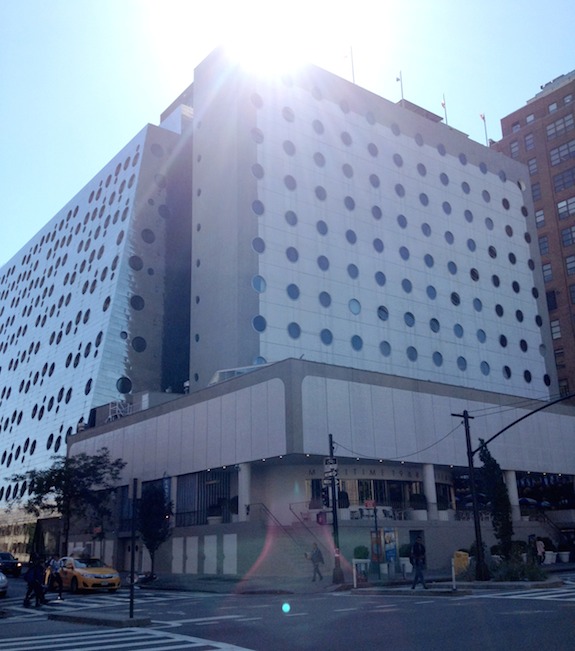
Not too far away in the trendy Chelsea neighbourhood is another of Ledner’s ocean-inspired designs – what was originally the National Maritime Union. Its white concrete exterior, porthole windows and the more recent addition of mirrored tiles again dock the sea experience on dry land.
In the late 1980s it became a shelter for runaways, before being sold as housing and education for Chinese students, artists and business people in 1996 and is now a stylish cruise-themed hotel – The Maritime Hotel. All aboard!
15 Union Square West
(Built 1869, renovated 2006)
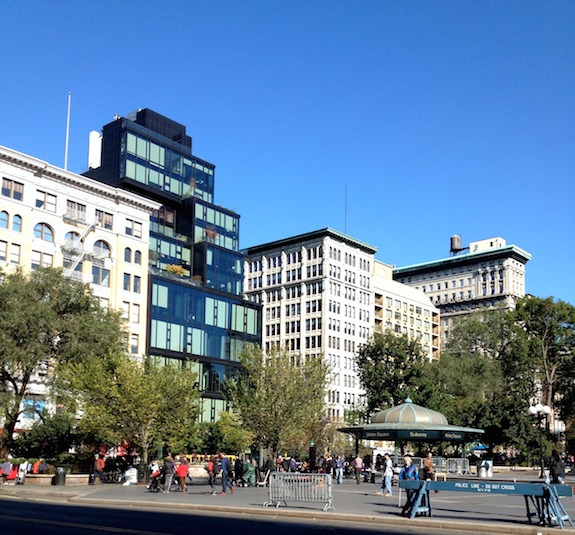
Another serendipity discovery was this imposing glass building block tower two doors down from the popular Coffee Shop diner and lounge in Union Square, where the Flatiron District, Chelsea, Greenwich Village, East Village and Gramercy areas converge.
The multi-million dollar condominium apartments now bear little semblance to the original 1969 Tiffany & Company headquarters, yet the jeweller’s cast-iron arches can still be seen behind the glass and aluminum façade, having been freed from the white brick that encased them from the 1950s – 2000s.
The Flatiron Building
175 Fifth Avenue (built 1902)
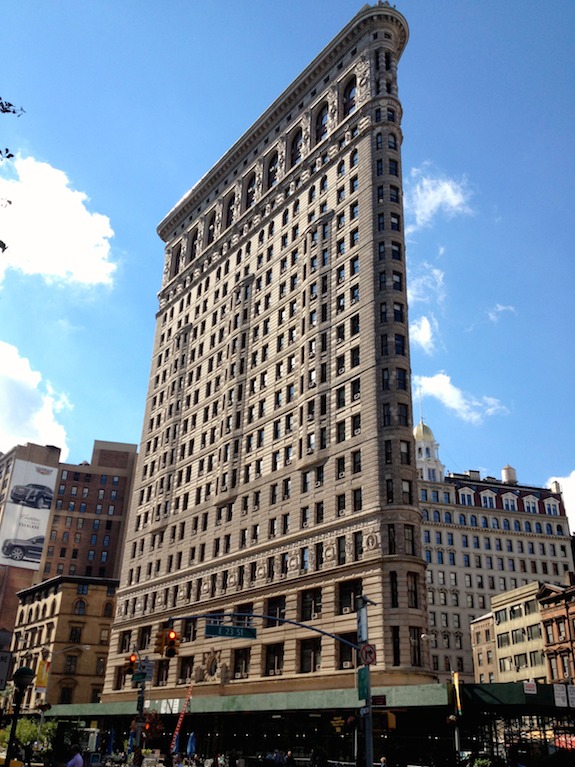
The namesake of New York’s Flatiron district, this distinctive skyscraper was so called due to its resemblance to a clothes iron.
The wedge-shaped building, constructed from a steel-skeleton with limestone and glazed terra-cotta façade, was one of the tallest in the city but was greeted with a few damning reviews when it first arrived on the scene; The New York Tribune apparently calling it “a stingy piece of pie… the greatest inanimate troublemaker in New York”.
But having been designated a New York City landmark in 1966, added to the National Register of Historic Places in 1979 and named a National Historic Landmark in 1989, this is one piece of pie with no sell-by date.
Charles Scribner’s Sons Publishing
597 – 599 Fifth Avenue (built 1913)
Founded in 1846, Charles Scribner’s Sons is celebrated as the publishers of American authors such as F. Scott Fitzgerald, Ernest Hemingway, Kurt Vonnegut and Stephen King to name but a few.
In 1913, the company moved into this grand Fifth Avenue residence designed by Ernest Flagg (Charles Scribner the Second’s brother-in-law) from their previous 153-157 Fifth Avenue headquarters, also built by Flagg.
With the interior, which now houses Benetton’s flagship store, restored to all its Beaux Arts grandeur it’s just one of the Fifth Avenue buildings that conjure up images of Great Gatsby-style glamour.